


Key Takeaways
- Clinical studies are essential for driving innovation in lung cancer detection, treatment, and overall patient care.
- Diversity in clinical trial participation leads to more effective and equitable treatment outcomes.
- Technological advancements, such as artificial intelligence and non-invasive diagnostic tools, are transforming lung cancer prognosis and early detection.
- Community-based care and strategic treatment timing (chronotherapy) play significant roles in improving survival and quality of life for lung cancer patients.
Table of Contents
- Advancements Through Clinical Trials
- Addressing Disparities in Clinical Research
- Innovations in Early Detection
- Integrating Artificial Intelligence in Prognosis
- Community-Based Care and Clinical Trials
- Enhancing Treatment Efficacy Through Chronotherapy
- Conclusion
Lung cancer remains one of the most complex and challenging diseases to treat, requiring continuous advancement in medical knowledge and patient care. Over the years, progress in diagnostics, therapies, and supportive care has been driven largely by systematic research efforts that examine how new approaches perform in real-world settings. These structured investigations enable clinicians to better understand disease progression, treatment responses, and patient outcomes, thereby forming a foundation for evidence-based care that evolves in tandem with scientific discovery.
Within this framework, clinical studies play a vital role in shaping improvements across the entire care pathway. By evaluating emerging medications, combinations of therapies, and innovative treatment strategies, clinical trials for lung cancer contribute essential insights into safety, effectiveness, and quality of life considerations. The findings from these studies inform clinical guidelines and support more personalized treatment decisions. Ultimately, this ongoing research process helps ensure that lung cancer care continues to advance in a careful, methodical manner that prioritizes patient well-being and long-term outcomes.
Advancements Through Clinical Trials
Clinical trials are not only the gateway for promising new treatments but also provide essential data about effectiveness and safety. Recent trials have investigated the importance of timing in administering lung cancer therapies. For example, new evidence shows that timing immunochemotherapy for extensive-stage small cell lung cancer before mid-afternoon can significantly extend survival and slow disease progression. This underscores how even subtle changes in treatment delivery can have a profound impact on patient outcomes, highlighting the importance of ongoing research into every aspect of care.
This innovative approach to treatment timing, known as chronotherapy, is just one example of how rigorous clinical studies drive continual improvement in lung cancer care. Trials also examine the introduction of new pharmaceuticals, the sequence of multi-modality treatments, and protocols to minimize side effects, all with the goal of enhancing outcomes for people living with lung cancer.
Another dimension of clinical research is understanding disparities that have historically affected access and efficacy across different groups. These insights inform strategies that target equity and greater patient benefit throughout the healthcare system.
Addressing Disparities in Clinical Research
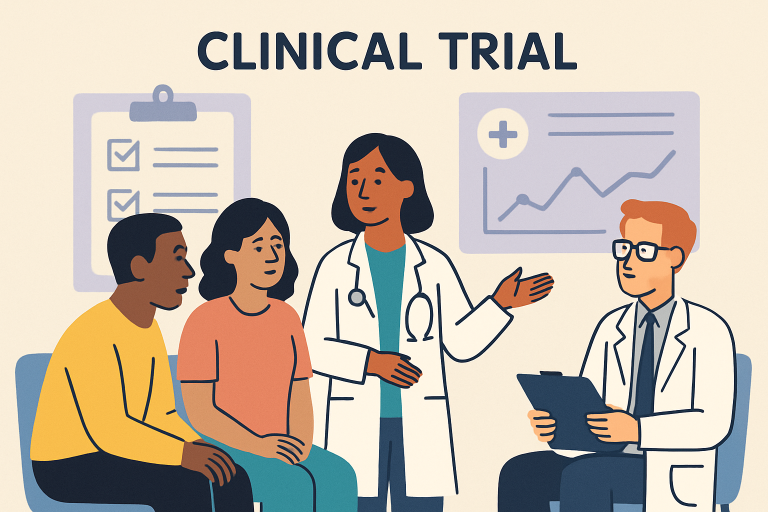
Inclusive clinical trials are critical for ensuring that breakthroughs benefit all patient populations. Programs designed to increase participation among underrepresented groups, such as recent efforts by the American Lung Association to boost Hispanic involvement, are vital steps forward. Differences in genetics, lifestyle, and access to healthcare can influence how patients respond to treatments, so diverse enrollment ensures the creation of safer and more effective therapies for everyone.
Historically, disparities in clinical trial participation have contributed to unequal outcomes, with minority populations often experiencing higher mortality rates and lower survival. Through outreach, education, and community engagement, modern clinical research is making strides toward more representative trial populations—which ultimately leads to more individualized and equitable care.
Innovations in Early Detection
Early detection remains one of the most powerful tools for reducing lung cancer mortality rates, as cancers caught in their initial stages are significantly more treatable. Innovative solutions, like the “E-nose” developed at Memorial Sloan Kettering Cancer Center, demonstrate the potential of non-invasive screening technologies. By analyzing volatile organic compounds in a patient’s breath, the E-nose can identify early lung cancer signatures without the need for radiation or invasive procedures, encouraging more people to seek early screening when it’s most effective.
Just as important as developing new diagnostic tools is ensuring people are aware of and have access to these breakthroughs. As these methods become more widely adopted, they have the potential to reshape lung cancer survival statistics worldwide.
Integrating Artificial Intelligence in Prognosis
Artificial intelligence (AI) has emerged as a powerful ally in cancer care, capable of processing complex, large-scale clinical data to refine predictions about patient prognosis. AI algorithms synthesize a multitude of variables—such as patient history, tumor markers, and genomic sequencing results—to produce highly individualized risk assessments and treatment recommendations. This not only supports earlier intervention strategies but also elevates the overall precision of personalized care.
Several studies have demonstrated that AI-driven tools can outperform traditional models in predicting treatment response and survival, enabling clinicians to tailor therapy plans and prioritize resources more effectively.
Community-Based Care and Clinical Trials
The majority of lung cancer patients receive treatment in community healthcare settings rather than at major academic centers. Ensuring these settings are equipped with the latest advances—such as biomarker testing and access to clinical trials—is critical for reducing disparities in care quality. The Association of Community Cancer Centers has focused on overcoming barriers to standardizing and disseminating best practices, particularly in the care of early-stage non–small cell lung cancer.
By embedding research-based strategies and comprehensive support resources into community clinics, the lung cancer care system can achieve more consistent and uniform outcomes across diverse populations and geographic areas.
Enhancing Treatment Efficacy Through Chronotherapy
Chronotherapy—the timing of interventions based on the body’s natural physiological rhythms—has gained momentum as research continues to validate its impact on treatment efficacy. Aligning cancer therapy with circadian biology can help optimize drug metabolism, lessen toxicity, and improve overall response. Clinical studies around chronotherapy signal a new frontier, where not just the type of therapy, but when it is given, becomes a critical part of personalized cancer care.
Conclusion
Clinical studies form the backbone of ongoing progress in lung cancer care. Through innovation, inclusivity, and a keen focus on both early detection and optimized treatment, lung cancer research is paving the way for longer survival and a better quality of life for patients worldwide. Every breakthrough in the lab and every new protocol tested at the bedside represents hope—hope that is made possible for all when clinical trial participation is robust and representative.