

Key Takeaways
- AI and automation are transforming how organizations defend against increasingly sophisticated cyber threats.
- Integrating intelligent technologies into firewall management enhances threat detection speed and accuracy.
- Operational efficiency increases significantly as AI handles routine tasks, allowing security teams to focus on strategy.
- Successful adoption requires careful planning, specialized training, and continuous monitoring of AI-driven systems.
Table of Contents
- Understanding AI and Automation in Firewall Management
- Benefits of Integrating AI and Automation
- Challenges and Considerations
- Real-World Applications
- Implementing AI and Automation in Your Organization
- Future Trends
- Conclusion
Understanding AI and Automation in Firewall Management
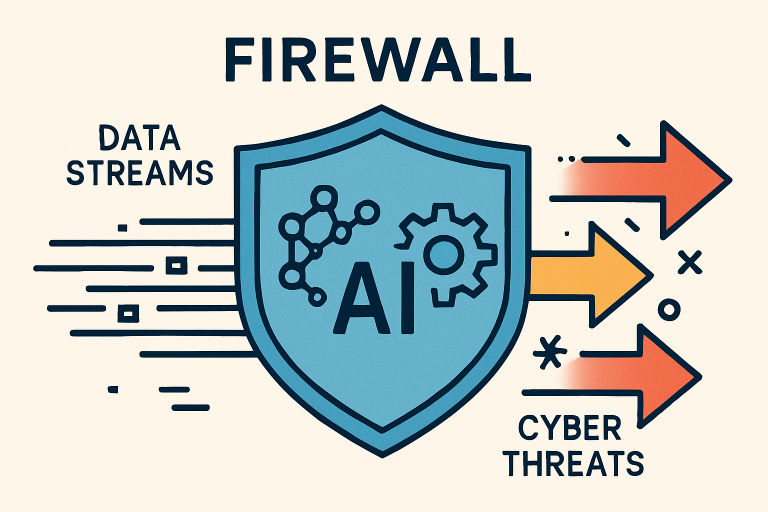
With the rise of complex cyber threats, traditional firewalls alone are no longer enough to provide adequate protection for modern enterprise networks. Breakthroughs in Artificial Intelligence (AI) and automation are rapidly accelerating the abilities of security technologies to defend sensitive data and infrastructure. Solutions equipped with integrated AI and machine learning harness powerful algorithms to analyze incoming and outgoing network traffic in real time, while automated systems enforce rules or react to incidents faster than human operators ever could. For organizations seeking robust, next-generation threat prevention that adapts to the ever-changing cyber landscape, considering platforms like the Versa Networks firewall solution becomes critical.
AI systems within firewalls utilize deep learning and advanced analytics to identify new attack signatures, anomalies, and suspicious behaviors that would likely evade legacy defenses. Automation, on the other hand, enables firewalls to instantly update rule sets, isolate compromised segments, and mitigate threats without human intervention, ensuring relentless, 24/7 vigilance. The combination of AI and automation is creating a new benchmark for proactive defense as more companies move operations and sensitive assets to cloud and hybrid environments.
Embracing these innovations also means rethinking traditional IT security workflows. Security teams are increasingly leveraging AI as a force multiplier, relying on it not only for explosive speed in detection but also for contextual insights that help prioritize threats and orchestrate intelligent responses across the entire network environment.
It’s not surprising that industry reports from sources like Gartner note a dramatic uptick in spending on intelligent, automated security tools, underscoring an industry-wide shift toward embracing these advanced technologies for more resilient firewall deployments.
Benefits of Integrating AI and Automation
- Enhanced Threat Detection: Machine learning allows modern firewalls to go beyond signature-based detection, dynamically spotting patterns and detecting advanced threats such as zero-day exploits, malicious insiders, and evolving malware.
- Real-Time Response: Automated systems block suspicious activity, such as anomalous login attempts or unauthorized data transfers, within milliseconds, shrinking the time attackers have to inflict damage or exfiltrate data.
- Operational Efficiency: By automating rule updates, reporting, and initial threat response, organizations reduce human error while freeing up skilled security professionals to focus on strategic initiatives and advanced threat hunting.
These advantages enable businesses to shift from a reactive to a proactive security posture, reducing the operational fatigue often associated with managing a complex network of security appliances.
Challenges and Considerations
While promising, the adoption of AI and automation in firewall management also introduces several challenges. Effective deployment typically requires specialized skills in data science, analytics, and machine learning, which may require upskilling teams or partnering with managed service providers. Integration with legacy infrastructure can be complex due to disparate protocols and management systems.
- Complexity: AI systems need to be meticulously configured to integrate with other security functions and ensure consistent policy enforcement.
- False Positives: Even highly sophisticated AI algorithms may occasionally flag legitimate activity as malicious, potentially disrupting business operations if unchecked.
- Adaptability: Since cyber threats evolve rapidly, AI models require regular retraining with fresh data and ongoing validation against new attack techniques.
Industry practitioners are increasingly turning to resources such as CSO Online for guidance on addressing the real-world challenges of deploying intelligent security systems.
Real-World Applications
Organizations across sectors are already seeing tangible benefits from next-generation firewalls powered by AI and automation. Dynamic firewalls, often called “Dynamically Retrainable Firewalls,” automatically adjust defenses as new threats emerge, using live analytics and real-time data models. Scholarly research underscores their effectiveness in environments where the threat landscape shifts rapidly, such as financial services and critical infrastructure.
- Adaptive Cybersecurity: These firewalls utilize live network data and machine learning to actively refine detection rules and proactively quarantine suspicious activity, keeping pace with complex, multi-stage attacks.
- AI-Driven Policy Management: Large enterprises deploy AI to manage firewall policies at scale, minimizing misconfigurations and automating rule deployment across complex, distributed infrastructure.
Implementing AI and Automation in Your Organization
- Assess Current Infrastructure: Conduct a comprehensive analysis of your existing firewalls to identify bottlenecks, manual dependencies, and integration points for automating.
- Choose the Right Tools: Select a firewall platform and AI technologies that align with your team’s skillset and your organization’s operational realities. Prioritize tools with a proven track record and community support.
- Train Staff: Invest in ongoing training to ensure security personnel not only understand how to interpret AI-driven output but can also identify when human oversight is needed.
- Monitor and Update: Establish feedback mechanisms that allow your team to review, tune, and retrain firewall AI models, adapting to new threats as they arise and minimizing false positives and negatives.
Effective rollout of these technologies is an iterative process that demands a culture of continuous improvement and a willingness to embrace new workflows and best practices.
Future Trends
- Predictive Analytics: AI-driven firewalls of the near future will anticipate potential threats before breaches occur, using predictive modeling based on historical attack patterns and emerging intelligence.
- Self-Healing Systems: The next evolution will see firewalls capable of autonomously patching vulnerabilities and recalibrating rules in response to detected weaknesses, bolstering organizational resilience.
- Integration with Broader Security Stacks: Firewalls will increasingly function as part of unified, AI-driven security ecosystems that deploy coordinated defense strategies across endpoints, networks, and cloud environments.
As these trends gain traction, expect accelerated industry adoption and further innovation, driving more agile and resilient approaches to digital defense.
Conclusion
Integrating AI and automation into firewall management fundamentally changes how organizations protect themselves in a digitally connected world. Enhanced detection, rapid threat response, and resource optimization are now essential attributes in a landscape defined by relentless and adaptable cyber adversaries. Companies that prioritize these next-generation technologies will be well-positioned to maintain robust defenses and confidently navigate the demands of modern cybersecurity.