

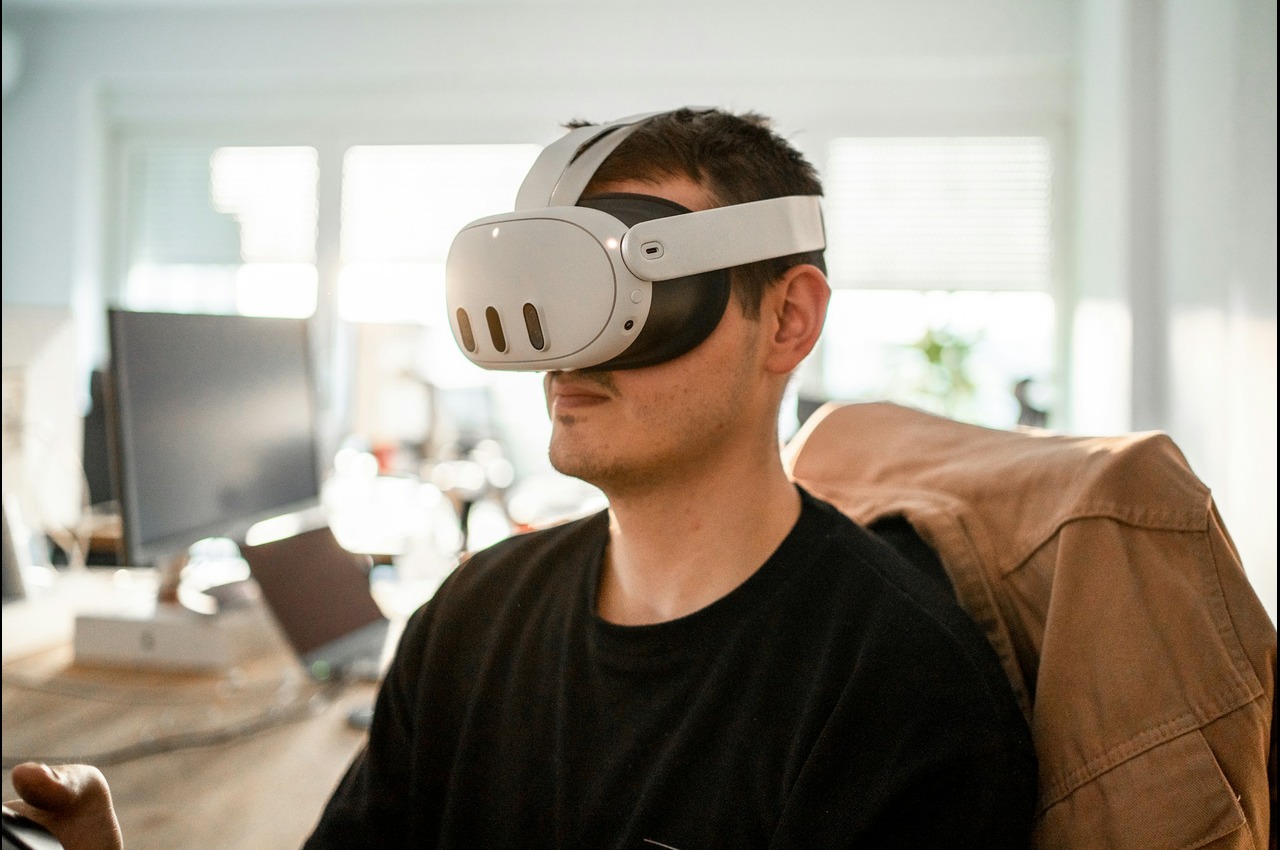
Imagine strolling through your local park and suddenly a dinosaur darts past you. Or perhaps you’re in your living room and a virtual piece of furniture appears exactly where you want it. Welcome to the world of Ark Augmented Reality, where the line between our physical environment and its digital enhancements completely disappears. This groundbreaking technology isn’t just about spectacular visual effects; it’s redefining how we interact with the world around us. Let’s dive into this fascinating universe together and discover what Ark Augmented Reality truly has to offer and how it’s poised to transform our everyday lives.
What is Ark Augmented Reality?
Ark Augmented Reality is an innovative platform designed to enrich our interaction with digital content. By seamlessly blending virtual elements with our physical environment, it creates captivating and immersive experiences.
This technology uses advanced computer vision and machine learning techniques to recognize real-world objects. Digital overlays appear in real time, making interactions more intuitive and engaging.
Unlike traditional augmented reality applications, Ark prioritizes intuitive interfaces suitable for a broad audience. Whether for educational, gaming, or professional applications, its versatility is a major advantage.
Developers benefit from the powerful tools of the Ark ecosystem. This fosters creativity and minimizes the technical challenges typically encountered in augmented reality projects.
As augmented reality evolves, platforms like Ark will play a key role in the future of interactive media.
The Rise of Ark Augmented Reality
Ark Augmented Reality has rapidly transitioned from a niche technology to a mainstream phenomenon. Initially found in video games and entertainment, augmented reality (AR) is now expanding into diverse sectors, including education, healthcare, and retail.
The rise of smartphones equipped with high-performance cameras has paved the way for AR experiences to become accessible to everyone. Apps like Pokémon GO have demonstrated how interactive elements can be seamlessly integrated into our environment.
Businesses have also recognized this potential. Retailers have begun integrating AR features that allow customers to preview products before purchasing them. This not only enhances customer interaction but also boosts sales.
Educational institutions are leveraging AR to create immersive learning experiences, transforming traditional classrooms into dynamic environments where students can interact with digital content.
As more sectors adopt this technology, its applications continue to expand, transcending boundaries and redefining human interaction with the digital world. The arrival of augmented reality is just the beginning of an exciting journey toward new horizons.
How does Ark Augmented Reality work?
Ark Augmented Reality works through a sophisticated combination of hardware and software. It uses cutting-edge sensors, cameras, and GPS technology to create immersive experiences.
When a user interacts with the Ark AR platform, their device analyzes their real-world surroundings. This analysis allows virtual elements to be seamlessly overlaid onto physical objects. The result is an immersive interaction that transforms our perception.
Machine learning plays a fundamental role in improving these interactions. The more users interact with the platform, the more it learns their preferences and behaviors. This adaptation fosters the personalization of future experiences.
Furthermore, Ark AR uses cloud computing for data processing and storage. Thanks to its powerful servers, it delivers high-quality graphics without impacting device performance.
The synergy of these technologies makes Ark Augmented Reality a powerful tool for a variety of applications. Whether for video games or education, this innovative approach redefines our digital interaction with the environment.
Potential Applications of Ark Augmented Reality
Ark Augmented Reality opens up a world of possibilities across various sectors.
In education, it revolutionizes how students interact with content. Imagine learning about the solar system by interacting with 3D models of planets right in your classroom.
The shopping experience is also transformed. Consumers can visualize products in their own environment before making a purchase: imagine how furniture and decorative objects come to life thanks to augmented reality.
The healthcare sector also benefits significantly. Surgeons can overlay crucial information during procedures, improving accuracy and patient outcomes, while training programs become more immersive for medical students.
Entertainment is another area that benefits from Ark Augmented Reality; games and storytelling blend seamlessly, offering users an interactive, personalized, and engaging narrative experience.
Urban planning could see improvements as planners use augmented reality overlays to visualize new developments within existing landscapes, facilitating informed community discussions.
Advantages and Limitations of Ark Augmented Reality
Ark Augmented Reality offers several advantages that can enhance the user experience. Its immersive nature allows users to interact with digital elements in a real-world context. This interaction creates stimulating environments for learning, training, and entertainment.
Furthermore, Ark AR is adaptable to various sectors. From healthcare to education, it offers tailored solutions that meet specific needs. Companies can showcase their products in innovative ways, thereby strengthening customer engagement.
However, this technology also has limitations. It requires high-performance hardware and software, which are not accessible to everyone. A poor internet connection can also negatively impact the experience.
In addition, privacy and data security in augmented reality applications raise concerns. Users should approach these issues with caution while taking advantage of the new possibilities offered by Ark AR technology. Striking a balance between innovation and responsible use remains essential for its development and adoption.
The Future of Ark Augmented Reality
The future of Ark Augmented Reality is bright. With technological advancements, we can expect even more immersive experiences that seamlessly integrate into our daily lives.
Smart glasses and wearables will become commonplace, allowing users to interact with digital content in real time. Imagine exploring a city while interacting with augmented reality overlays that offer historical information or local recommendations.
Sectors such as education and healthcare will also benefit greatly. Students will be able to visually explore complex concepts, while doctors will be able to use augmented reality for greater surgical precision.
Furthermore, social interactions could evolve. Virtual encounters could take on a new dimension with avatars interacting in shared spaces enhanced by augmented images.
With constant innovation and active user engagement at the heart of its strategy, Ark AR is poised to redefine our perception of reality. Their focus on accessibility will ensure that everyone can participate in these innovative experiences.
Conclusion
Ark’s augmented reality universe opens a new dimension to our interaction with the environment. With technological advancements, the potential for immersive experiences, which seamlessly merge the digital and physical worlds, is growing. From education to entertainment, the applications are vast and varied.
As users become more familiar with augmented reality, businesses should quickly adopt these innovations. The benefits offered by Ark AR can enhance customer interaction, streamline operations, and create unique marketing opportunities. However, it is crucial to be aware of its limitations.
In the future, we can anticipate significant advancements in this field. Improvements in hardware capabilities and refinements in software solutions could push the boundaries even further. This constant evolution will require rapid adaptation from both developers and users.
Ark’s augmented reality is not just a technological trend; it represents a paradigm shift in interaction. Embracing this shift will be crucial to exploring this exciting frontier of digital experience.