

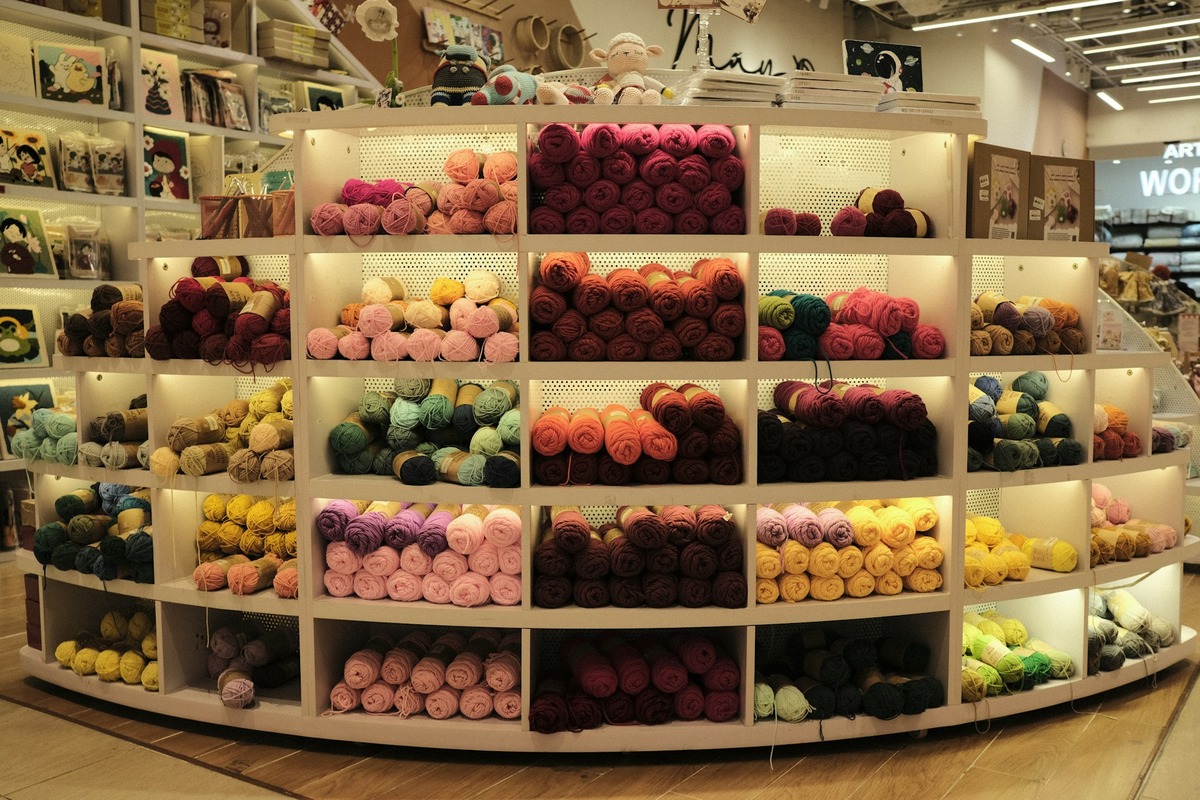
Introduction to the Concept of “Wollwirrware”
The term “wollwirrware” has emerged as a novel and stimulating concept in online discussions about textiles, sustainability, and craftsmanship. While it may initially seem like a simple compound word, “wollwirrware” possesses a rich and complex meaning, at the intersection of language, creativity, and environmental responsibility. It reflects both the symbolic image of tangled wool and an innovative vision for the sustainable production of yarns and textiles.
In recent years, the global textile industry has been forced to transform. Climate change, resource depletion, excessive waste, and growing consumer awareness have compelled manufacturers and designers to rethink conventional systems. In this rapidly evolving context, the concept of “wollwirrware” has emerged as a conceptual identity representing regenerative materials, circular production models, ethical sourcing, and technological innovation.
Understanding the concept of “wollwirrware” involves examining its linguistic roots, its metaphorical implications, and its development into a textile philosophy centered on sustainability.
Linguistic and Symbolic Meaning of Wollwirrware
The term “wollwirrware” appears to originate from a German linguistic structure, combining “Wolle,” meaning wool, with “Wirrwarr,” which evokes confusion or disorder. The resulting image is striking and evocative. Tangled threads are a universal experience for weavers, textile artists, and craftspeople. A carefully wound ball of yarn can quickly transform into a complex knot, requiring patience and attention to untangle.
This literal interpretation goes beyond simply describing a tangle of fibers. It serves as a metaphor for the complexity of creative and industrial processes. Just as tangled threads require skill and careful observation, complex systems demand thoughtful restructuring rather than brute force. Wollwirrware, therefore, symbolizes transformation through patience.
This metaphor naturally extends to life and innovation. Creative progress is rarely linear. Challenges, setbacks, and overlapping ideas often precede clarity. The concept of “wollwirrware” captures this transitional state where confusion is not a failure, but a stage of development. It recognizes disorder as a precursor to refinement.
“Wollwirrware” as a Framework for Sustainability
Beyond the metaphor, “wollwirrware” has become a broader discourse on sustainability in the textile sector. It represents a transition from linear production models to regenerative and circular systems. Although not associated with an official certification body or registered organization, “wollwirrware” functions as a conceptual framework that synthesizes modern environmental principles.
Historically, the textile industry has relied on synthetic fibers derived from fossil fuels, resource-intensive agriculture, and dyeing processes that utilize numerous chemicals. These practices have significantly contributed to greenhouse gas emissions, microplastic pollution, water contamination, and landfill waste. Woollwirrware redefines yarn and fabric production as a strategic opportunity to reduce environmental impact while preserving performance and design integrity.
Within this framework, sustainability is not an add-on to existing systems. It is integrated into material selection, manufacturing processes, supply chain transparency, and product lifecycle management.
Renewable Materials: The Foundation of Wollwirrware
One of Wollwirrware’s core characteristics is its focus on renewable and responsibly sourced fibers. Conventional polyester and other petroleum-derived synthetic fibers have long dominated global textile markets thanks to their cost-effectiveness and durability. However, their environmental impact is becoming increasingly evident.
Wollwirrware prioritizes alternatives such as responsibly sourced wool, organic cotton, hemp, bamboo-derived fibers, and regenerated cellulose materials. These raw materials reduce dependence on fossil fuels and are generally more biodegradable at the end of their life cycle. Regenerative farming practices, combined with certain natural fibers, can improve soil health, reduce pesticide use, and promote biodiversity.
Materials innovation plays a vital role in strengthening this foundation. Modern spinning technologies improve fiber efficiency, thereby minimizing waste during yarn production. Advanced blending techniques allow high-performance yarns to maintain their durability while reducing their environmental footprint. Through rigorous materials engineering, Wollwirrware integrates ecological responsibility with functional quality.
Integrating the Circular Economy into Wollwirrware Systems
The traditional textile economy follows a linear model of extraction, production, consumption, and disposal. This model has generated significant volumes of waste, especially with the accelerated product turnover driven by fast fashion. Wollwirrware challenges this approach by integrating circular economy principles from the very design of yarns and fabrics.
Circular systems prioritize reuse, recycling, and regeneration. Fiber scraps from the spinning process are reintroduced into production cycles. Post-consumer textile waste can be mechanically or chemically transformed into regenerated fibers, suitable for creating new yarns. By considering the end of product life from the earliest design stages, Wollwirrware reduces the risk of waste ending up in landfills.
Closed-loop water systems used in dyeing processes minimize freshwater extraction and wastewater discharge. Renewable energy sources, such as solar and wind power, reduce carbon emissions from production plants. In this way, circularity becomes a fundamental structural element, not just a secondary consideration.
Technological Innovation at the Service of Wollwirrware
Modern sustainable development demands measurable performance, and Wollwirrware integrates technological advancements to achieve this. Energy-efficient spinning equipment reduces electricity consumption without compromising yarn quality. Automated precision cutting and monitoring systems minimize raw material waste and optimize operational efficiency.
Digital traceability tools improve supply chain transparency. Blockchain-based systems record the origin of fibers, processing steps, and environmental indicators, enabling verification of ethical sourcing and environmental compliance. Consumers and brands have access to verifiable data, strengthening trust.
Innovation transforms Wollwirrware from an abstract philosophy into a concrete practice. By combining data analytics, automation, and renewable infrastructure, this concept reconciles environmental responsibility with operational resilience.
Ethical Sourcing and Social Responsibility
Environmental protection must go hand in hand with ethical labor standards. Wollwirrware integrates social responsibility into its comprehensive sustainability strategy. The textile industry has long faced challenges such as unsafe working conditions and wage inequality. Addressing these issues is essential for genuine reform.
Wollwirrware’s ethical sourcing prioritizes fair wages, safe workplaces, and animal welfare in wool production. Transparent partnerships and third-party verification mechanisms strengthen accountability. Social sustainability reinforces supply chain integrity and aligns production systems with evolving consumer expectations.
As consumers increasingly evaluate brands’ ethical performance, integrating social equity becomes both a moral and strategic imperative.
Consumer Awareness and Market Transformation
Consumer behavior has changed significantly over the past decade. Increased access to information has highlighted the environmental and social problems inherent in conventional textile systems. Documentaries, digital activism, and sustainability campaigns have fueled the demand for responsible alternatives.
Wollwirrware resonates particularly strongly in this context, as it aligns with the values of responsible consumption. It offers a vision that combines renewable materials, a circular economy, ethical transparency, and innovation. Brands that adopt sustainable spinning systems stand out in competitive markets by prioritizing long-term responsibility over short-term volume.
Sustainable textiles are often perceived as having higher value due to their environmental and social benefits. As technological efficiency improves and economies of scale develop, eco-responsible production becomes more accessible to mass markets.
Reducing Environmental Impact with Wollwirrware
The environmental footprint of textile manufacturing encompasses carbon emissions, water consumption, chemical pollution, and waste generation. Wollwirrware addresses these challenges holistically. The integration of renewable energy reduces greenhouse gas emissions. Low-impact dyes decrease toxic runoff into aquatic ecosystems. Biodegradable fibers mitigate long-term microplastic pollution.
By coordinating improvements in raw materials, manufacturing technologies, and end-of-life management, Wollwirrware reduces environmental damage while preserving product sustainability. Impact reduction thus becomes systemic, rather than incremental.
Cultural and Aesthetic Influence of Sustainable Textiles
Beyond industry indicators, sustainable textiles influence design philosophy and cultural expression. Sustainable textiles prioritize a timeless aesthetic over fleeting trends. Designers who embrace eco-responsible materials often prioritize durability, natural color palettes, and minimalist silhouettes.
Traditional craftsmanship is combined with modern principles of sustainable development, preserving ancestral techniques while addressing the contemporary environmental emergency. In this way, sustainable textiles shape not only production systems but also the creative identity of the fashion and textile industries.
The aesthetic associated with this philosophy reflects authenticity, longevity, and thoughtful design.
Educational and Community Engagement
The transition to sustainable textiles requires broad awareness and collaboration. Educational institutions are increasingly integrating the principles of sustainable development into their fashion and textile programs. Community workshops promote garment repair, fiber knowledge, and responsible consumption habits.
By fostering knowledge sharing at various levels, sustainable textiles drive cultural change. Designers, manufacturers, and consumers collectively contribute to systemic reform. This shared responsibility strengthens the resilience of textile ecosystems.
Challenges and Scalability Potential of Sustainable Spinning
Implementing sustainable spinning systems presents logistical and financial challenges. State-of-the-art machinery and renewable energy infrastructure require significant investment. Ensuring transparency in the global supply chain demands coordination and standardized indicators.
However, regulatory frameworks are increasingly incentivizing environmentally friendly production. Carbon emissions reporting requirements and circular economy initiatives promote a sustainable transition. As the technology matures and collaborative partnerships develop, the scalability potential of sustainable spinning increases.
The flexibility of the concept allows it to be adapted to both small workshops and large industrial facilities.
Future Perspectives for Wollwirrware
The evolution of sustainable development in the textile industry suggests continuous innovation. Research into biodegradable synthetic fibers, algae-based fibers, and zero-waste manufacturing techniques is expanding the range of material possibilities. Governments worldwide are strengthening their climate commitments, highlighting the importance of responsible production systems.
Wollwirrware represents an integrated approach capable of evolving alongside this progress. Its focus on renewable materials, the circular economy, ethical sourcing, and technological integration makes it a resilient framework for the future development of textiles.
As sustainable development becomes an industry standard rather than a competitive advantage, the principles inherent in Wollwirrware acquire lasting importance.
Conclusion
Wollwirrware is a concept of remarkable depth and adaptability. Its linguistic roots evoke tangled wool, symbolizing patience, creativity, and transformation. Its modern evolution positions it as a textile philosophy centered on sustainable development, integrating renewable materials, circular economy systems, ethical labor practices, and technological innovation.
Although not affiliated with any formal institution, wollwirrware offers a coherent narrative that unites craftsmanship with climate responsibility. It illustrates the transition from complexity to clarity, both in the realm of spinning and in global production systems.
At a time when environmental responsibility and social transparency are essential, wollwirrware offers a hopeful and concrete vision for the future. By prioritizing regenerative materials, responsible design, and collaborative innovation, the textile industry can move from extractive models to a sustainable balance, transforming disorder into resilience and confusion into structured progress.